The Real Reason Concrete Porches Crack and How Overlays Stop It
A cracked and flaking front porch ruins the curb appeal of an otherwise beautiful home. Many homeowners assume that concrete simply degrades over time and that patching the surface is just part of normal home maintenance. Durham Hardscapes approaches this problem differently by addressing the root cause of concrete failure rather than just hiding the symptoms. Understanding how the environment attacks bare concrete changes how you choose to protect it.
The structural deterioration you see is almost entirely driven by water infiltration and temperature swings. Applying a thin coat of cement over a damaged porch only provides a cosmetic band-aid that will flake off within a year. A permanent solution requires blocking the moisture completely with a solid, weather-resistant barrier.
Here are the main topics we cover:
- Water absorption: How porous concrete acts like a sponge.
- Freeze and thaw damage: The physics behind the cracking.
- The overlay solution: Blocking moisture with natural stone.
- Long-term durability: Why an overlay outlasts standard repairs.
The Porous Nature of Concrete
Concrete appears solid, but it is actually highly porous. It absorbs rain, melting snow, and atmospheric moisture constantly. In older Oshawa neighborhoods, porches poured decades ago often lack modern sealing additives, making them particularly vulnerable to water absorption.
When people ask why the concrete on their front porch is cracking, the answer starts with this absorption. Every drop of water that seeps into the microscopic pores weakens the internal structure of the material. Over time, this constant dampness begins to break down the binders holding the cement together.
The Destruction of the Freeze-Thaw Cycle
The real damage occurs when the temperature drops below zero. The water trapped inside the concrete freezes and expands by roughly nine percent. This internal expansion creates immense pressure that the rigid concrete simply cannot withstand.
The surface begins to spall, creating a flaky, pitted appearance. Larger cracks develop as the structural integrity fails completely. Preventing concrete porch cracks requires stopping the water from entering the slab before the temperature drops.
How Natural Stone Overlays Prevent Damage
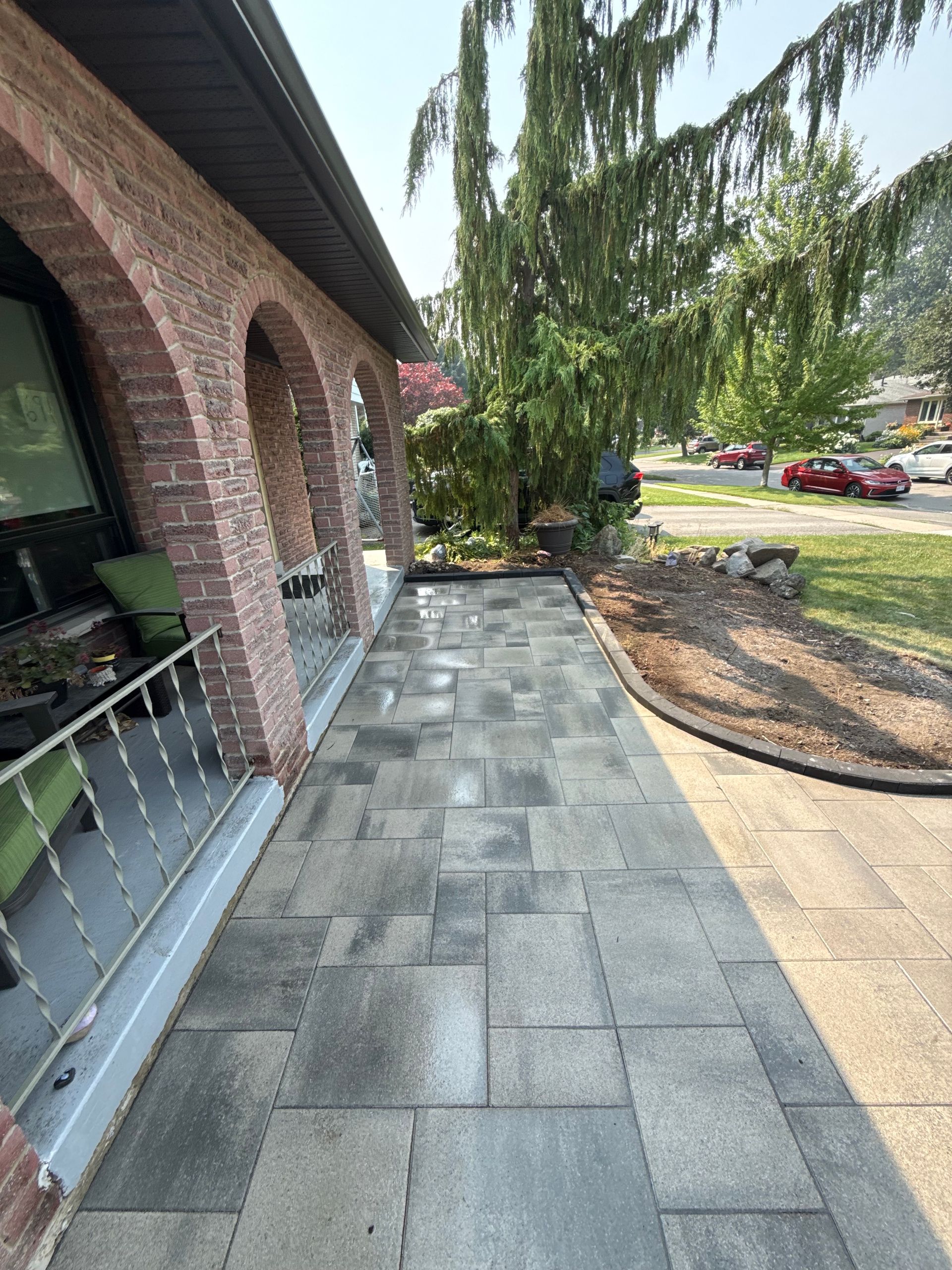
A porch overlay is not just a decorative upgrade. Installing high-quality natural stone over your existing concrete creates an impenetrable shield against the elements. Materials like granite, limestone, or dense flagstone have extremely low water absorption rates compared to bare concrete.
During the installation process, we repair the structural damage and apply a specialized bonding layer. The stone is then set precisely, and the joints are filled with polymer-based materials that flex and repel water. This completely seals the underlying concrete from rain, snow, and ice.
The Added Benefits of Stone Overlays
Beyond protecting the structure, an overlay completely changes the look of your home entryway. You gain the aesthetic appeal of a custom stone build without the massive expense of demolishing and repouring the entire porch foundation.
The natural stone also provides better traction during wet weather, improving safety for your family and guests. With minimal maintenance required, this upgrade offers a permanent, beautiful solution to an ugly structural problem.
Securing Your Front Entryway for the Future
Stop wasting time on surface patches that peel away after every winter. Protecting your porch with a premium natural stone overlay stops the degradation at the source and adds instant value to your property. Call us this week to schedule a site assessment and view our stone samples.
Share This Blog